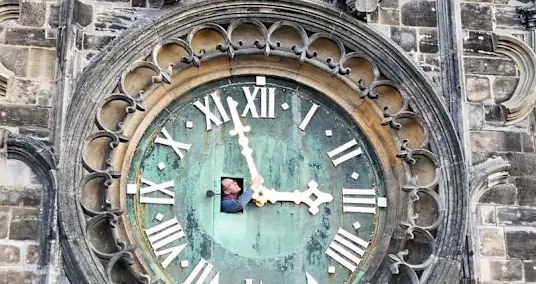
Clocks across the majority of European countries are set to go forward by one hour early on Sunday as the continent moves to daylight saving time, also known as summer time.
Clocks in most European nations including Germany advance by one hour at 2 am (0100 GMT) to 3 am, heralding longer evenings and brighter days.
This means that for the coming months parts of Europe will be on Central European Summer Time (CEST), before moving back to Central European Time (CET) in the autumn, when clocks go back again by an hour on October 25.
The aim of the change is to make better use of daylight in the shorter days of the winter in the northern hemisphere.
The signal for the automatic changeover of the clocks in Germany comes from the Federal Institute of Physics and Metrology (PTB) in the northern city of Braunschweig, also known as Brunswick in English.
The institute's experts ensure that radio-controlled clocks, station clocks and many industrial clocks are supplied with the signal via a long-wave transmitter called DCF77 in Mainflingen near Frankfurt.
LATEST POSTS
- 1
 As Western heat wave ends, scientists try to make sense of its length and intensity
 - 2Fundamental Home Machines: An Easy to understand Determination Guide
- 3Well known Tea Brands for Each Tea Sweetheart
- 4Remain Cool and Solid: Top Summer Food sources for 2024
- 5Social Skylines d: A Survey of \Inside and out Social Experiences\ Language Learning Book



- Image of foreigners being arrested in S.Africa during Eid is AI-generated
- Shas threatens to oppose 2026 state budget over haredi food-voucher exclusion
- 'We need everyone,' wounded reservist urges Knesset panel to advance haredi draft law
- Rights group: At least 2,500 deaths during protest crackdown in Iran
- David Duchovny's new thriller has him stripping down at 65. But its chilling premise hits close to home.
- From Overpowered to Coordinated: Individual Accounts of Cleaning up
- Cuba fights to contain spread of mosquito-borne chikungunya virus
- Climate engineering would alter the oceans, reshaping marine life – our new study examines each method’s risks
- Whale stranded off Germany for days free again