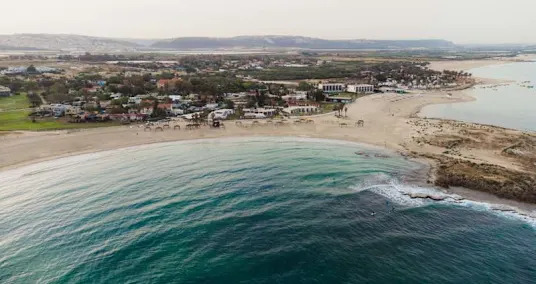
The discovery was made in an ancient shipwreck in the Dor Lagoon near the Carmel Coast, where archaeologists recovered nine pieces of unprocessed iron known as “blooms.”
Researchers from the University of Haifa said Wednesday that an underwater excavation off Israel’s northern Mediterranean coast uncovered what they described as the earliest known cargo of raw iron transported by ship, dating back around 2,600 years, Xinhua reported.
The discovery was made in an ancient shipwreck in the Dor Lagoon near the Carmel Coast, where archaeologists recovered nine pieces of unprocessed iron known as “blooms.” According to the university, the find provides direct evidence of how iron was transported in its earliest commercial stages.
The material was preserved in its original form, having solidified directly in a smelting furnace without undergoing forging or further refinement. Researchers said this distinguishes the cargo from later iron artifacts that typically show signs of shaping or tool-making.
Unlike copper and bronze, which could be melted into liquid form in ancient production processes, iron was heated with charcoal to produce a solid, porous mass. That mass was generally hammered to remove impurities and create denser material suitable for tools and implements.
The recovered blooms showed no indication of that secondary processing stage, suggesting they were transported immediately after production.

Earliest iron shipment discovered in ancient Mediterranean wreck
To determine the age and condition of the cargo, researchers conducted microscopic and chemical analyses.
Radiocarbon dating was also carried out on charred wood embedded in one of the pieces, helping confirm the timeline of the shipment. The findings were published in the journal Heritage Science.
Researchers said the cargo indicates that iron was being moved in raw form from production sites to other locations for further processing, pointing to a level of specialization in ancient manufacturing and trade networks in the Mediterranean.
The University of Haifa said the discovery provides new insight into early iron production and distribution practices in the region.
LATEST POSTS
- 1
 Rick Steves' Favorite Time To Visit Spain Has Lower Prices And Fewer Crowds
 - 2Watch India launch advanced military satellite on rocket's 1st flight since May 2025 failure
- 3Limited Rain Chances in Brazil Boost Coffee Prices
- 4Etymological Experiences on the Wireless transmissions: A Survey of \Learning in a hurry\ Language Web recording
- 5The Best Web-based Courses for Ability Advancement


- Greece eyes migrant repatriation centres outside the EU
- Israeli strike on Gaza City vehicle kills at least four, report says
- A Concise History Of The Entertainment world
- My Excursion to a Better Way of life: Health Experiences
- Explosions heard across Tehran after IDF announces wave of strikes on regime terror targets
- Criminal Guard Lawyer Expenses: What Would it be advisable for you to Hope to Pay?
- The Response to Self-improvement: Embracing a Development Outlook
- Tzrifin base exhibition reveals Hamas and Hezbollah arms, showing structure behind attacks
- Turning to turkey’s tryptophan to boost mood? Not so fast